
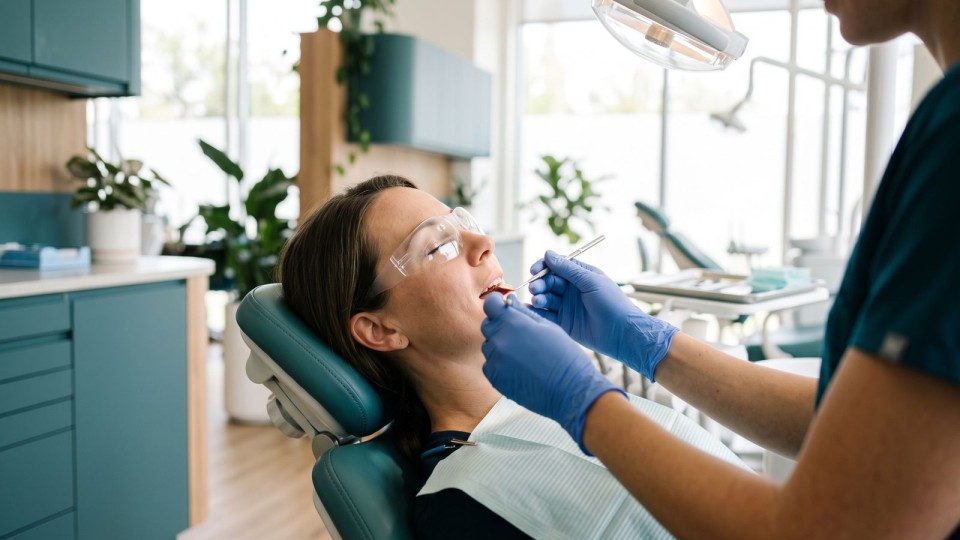
Scaling (tartar removal) is a basic preventive procedure in which hardened plaque deposits on the tooth surface are removed with special instruments. When performed with the right technique and at appropriate intervals, it does not harm the teeth; on the contrary, it helps prevent and treat gum disease. Even so, misconceptions such as "it wears down the enamel" or "it loosens the teeth" lead many people to put off this procedure. In this article, we address the six most common myths.
What is tartar, and why does it need to be removed?
Tartar (calculus) is a deposit that forms when bacterial plaque on the tooth surface hardens with minerals in saliva. It is most often found on the inner surfaces of the lower front teeth and on the cheek side of the upper molars; it can also form below the gumline.
Tartar above the gumline is usually yellowish-white and visible to the eye. Tartar below the gumline, however, can take on a dark brown or blackish color and is often only detected through an examination and X-rays.
The rough surface of tartar provides an ideal base for bacterial plaque to cling to. Because it cannot be removed by brushing, over time it can contribute to gum inflammation (gingivitis) and, if left untreated, to periodontitis. For its link with bleeding gums, see our article on why gums bleed.
What are the 6 common myths about scaling?
1. "Scaling wears down the enamel."
Not true. Ultrasonic instruments separate tartar from the tooth surface using high-frequency vibration and water, while hand instruments remove tartar by scraping it off. When performed with the right technique and appropriate tips, this procedure does not wear down the enamel. After cleaning, polishing may also be done to smooth the surface.
2. "After cleaning, teeth become loose and gaps open up."
Not true. Scaling does not damage the tissues that support the tooth. The reason you may feel gaps between your teeth after cleaning is that the tartar that previously filled those spaces has been removed. If you notice loose teeth, this is usually caused not by the cleaning but by pre-existing bone loss that was hidden beneath the tartar. As gum inflammation subsides, the gum tissue becomes firmer.
3. "Scaling is very painful."
This experience varies from person to person. For most people, scaling is completed with only a feeling of mild discomfort. When inflammation is severe, sensitivity is high, or cleaning below the gumline is needed, the procedure can be performed under local anesthesia; in that case, the aim is for you not to feel pain during the procedure.
4. "One cleaning is enough; tartar never forms again."
Not true. Plaque forms again every day and can turn back into tartar in areas that are not cleaned well. The rate of tartar formation varies from person to person; factors such as saliva composition, oral hygiene habits and smoking affect this rate. For this reason, cleaning is a preventive procedure that needs to be repeated at regular intervals.
5. "Tartar can be removed at home with a toothbrush or baking soda."
Not true. Hardened tartar cannot be removed with a toothbrush, floss or whitening toothpaste. Home remedies such as baking soda, lemon or vinegar, or metal scrapers bought online, can damage the enamel and gums. The most effective thing you can do at home is to remove plaque with regular brushing and interdental cleaning before it turns into tartar. For the right technique, see our article on proper brushing and interdental cleaning.
6. "Scaling is the same as gum treatment."
Not always. At the gingivitis stage, removing tartar above the gumline is often sufficient. If periodontitis has developed, tartar and bacterial deposits deep within the gum pockets need to be cleaned from the root surfaces. This procedure is part of gum disease treatment and is usually performed under local anesthesia, one section of the mouth at a time. For details, see our gum disease treatment page.
Is there sensitivity after scaling?
There can be, but it is usually temporary. Removing tartar exposes tooth surfaces that were previously covered, and sensitivity to cold and heat can last from a few days to a few weeks. Mild bleeding and tenderness of the gums also usually decrease within a few days as the inflammation subsides.
During this period, it may help to keep brushing with a soft-bristled brush, use a desensitizing toothpaste and avoid very hot or very cold foods for a while. If sensitivity lasts a long time or gets worse, you should let your dentist know.
Bleeding during cleaning usually indicates not that the procedure is causing harm, but inflammation that was already present in the gums. Healthy gums bleed little or not at all during cleaning. With regular care and check-ups, this bleeding decreases over time.
How often should scaling be done?
The cleaning interval is not the same for everyone; it is determined according to the person's gum health, rate of tartar formation and risk factors. For many people with good gum health, one or two check-ups a year may be sufficient. For people who have been treated for periodontitis, the interval for supportive periodontal care is generally planned individually, between 3 and 12 months. More frequent check-ups may be needed for smokers, people with diabetes and people with implants; for information about caring for implants, see our article on how to care for dental implants.
To determine the appropriate check-up interval, periodontist Dr. Nadin Gemrekoğlu, DDS, PhD, evaluates gum pocket depths and bleeding findings during the examination. Check-up appointments involve more than tartar removal; areas where home care is difficult are also identified together with the patient. For information about how the procedure is performed, see our scaling and root planing page.
When should you see a dentist?
If you notice hard yellow-brown deposits on your teeth, your gums bleed when you brush, or bad breath does not go away, you should see a dentist. Do not delay an examination in the following situations:
- Redness, swelling or inflammation of the gums,
- Gum recession and teeth that look longer,
- Loose or shifting teeth,
- Sensitivity after cleaning that lasts for weeks or keeps getting worse.
After the examination and any necessary tests, a decision is made as to whether scaling alone is enough or comprehensive gum treatment is needed. To make an appointment, please visit the contact page.