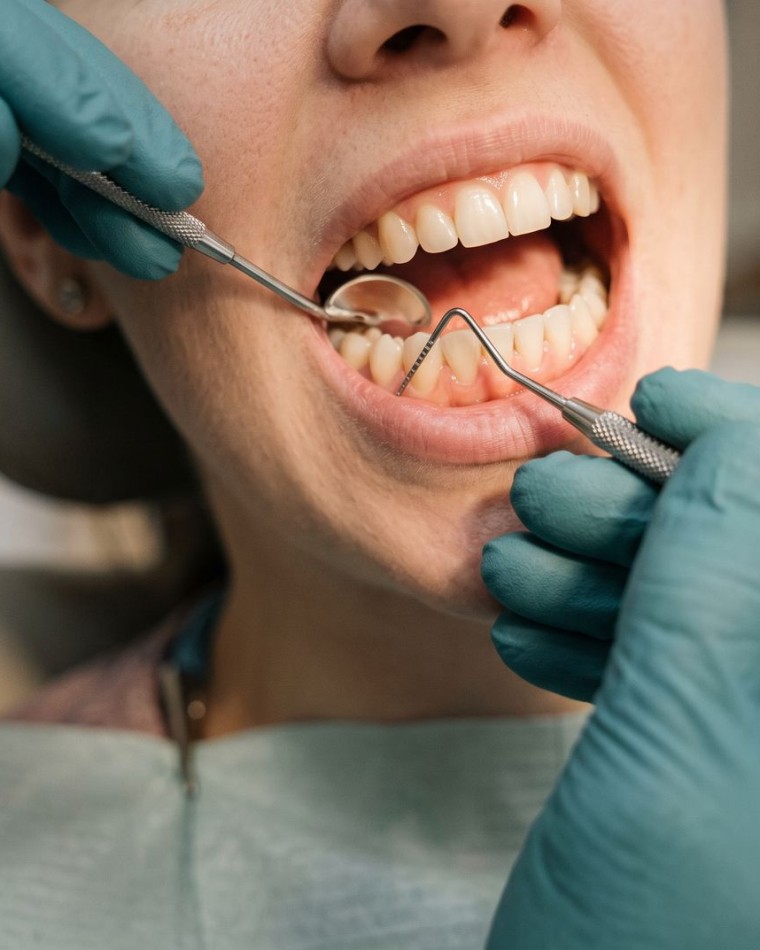
Gum (periodontal) diseases are inflammatory conditions, most often caused by bacterial plaque, that affect the tissues surrounding and supporting the teeth. Gingivitis, which affects only the gums, can progress if left untreated to periodontitis, which destroys the connective tissue and bone that hold the tooth in place. The goal of gum disease treatment is to bring the inflammation under control, stop further tissue loss and help the teeth remain healthy in the mouth.
What is the difference between gingivitis and periodontitis?
Gingivitis is the reversible stage in which the inflammation is limited to the gums. The gums become red and swollen and may bleed during brushing, but there is no loss of the bone that supports the tooth. With proper oral care and professional cleaning, the gums usually return to health.
Periodontitis, on the other hand, is a chronic disease in which the inflammation has spread to the deeper tissues, and the attachment between the tooth and the gum, as well as the jawbone, is lost. Deepened spaces called periodontal pockets form between the tooth and the gum. Bacteria that accumulate in these pockets cannot be removed with a toothbrush, and the inflammation often continues silently. In advanced stages, teeth may become loose, shift position or be lost.
Under the 2017 AAP/EFP classification, periodontitis is described by its stage (I–IV), which reflects the severity of the disease, and its grade (A–C), which reflects the rate of progression. For details, see our article on periodontitis stages and grades.
What are the signs of gum disease?
Gum disease often progresses without causing pain, so it is important to notice the following signs:
- Bleeding gums when brushing or flossing
- Redness, swelling and tenderness of the gums
- Persistent bad breath or a bad taste in the mouth
- Receding gums and teeth that look longer
- Loose teeth, gaps opening between teeth or a change in how your bite feels
- Pus coming from between the gum and the tooth
If you have one or more of these signs, it is advisable to see a dentist. Our article why do gums bleed? may help you understand the possible causes of bleeding.
How is gum disease diagnosed?
The diagnosis is made with a detailed periodontal examination. Using a thin, calibrated instrument called a periodontal probe, the probing depth, clinical attachment loss, bleeding on probing, gum recession and tooth mobility around each tooth are measured and recorded. The amount and pattern of bone loss are assessed with dental radiographs.
Your medical history is also part of the diagnosis. Smoking, diabetes, the medications you take, pregnancy and a family history of early tooth loss all influence both the diagnosis and the treatment plan. This information is used to determine the stage and grade of the disease; treatment is then planned individually after the examination and any necessary tests.
How is gum disease treated?
The S3-level clinical practice guideline of the European Federation of Periodontology (EFP) describes periodontitis treatment as a stepwise approach. At the end of each step, the response of the tissues is evaluated and a decision is made as to whether the next step is needed.
Step 1: Controlling risk factors and oral hygiene instruction
Treatment begins with understanding the cause of the disease. You are shown the brushing technique and interdental cleaning (floss, interdental brushes) that suit you, and plaque and tartar above the gumline are removed. You also receive guidance on risk factors such as quitting smoking and keeping diabetes under control. For gingivitis, this step is often sufficient.
Step 2: Non-surgical periodontal therapy
The core treatment for periodontitis is cleaning the pockets and root surfaces below the gumline. Under local anesthesia, bacterial plaque and tartar inside the pockets are removed with hand instruments and ultrasonic devices; the aim is for you not to feel pain during the procedure. This treatment is described in detail on our scaling and root planing page. Where considered necessary, supportive measures such as a short course of antiseptic mouthrinse may be planned; systemic antibiotics are considered only for certain patient groups, based on the clinician's assessment.
Initial (non-surgical) periodontal therapy is one of the most extensively researched topics in periodontology. The doctoral thesis of Dr. Nadin Gemrekoğlu, DDS, PhD, also focused on evaluating the effect of initial periodontal therapy on clinical and biochemical parameters.
Step 3: Re-evaluation and surgical treatment if needed
Once enough time has passed for the tissues to heal, the periodontal measurements are repeated. If deep pockets persist, repeating the cleaning, flap surgery that provides direct access to the pocket, or regenerative treatments for suitable bone defects may be considered.
Step 4: Maintenance (supportive periodontal therapy)
Regular follow-up is needed even after periodontitis has been brought under control. At maintenance visits, the measurements are repeated, plaque and tartar are removed, and your home care is reviewed. The EFP guideline recommends scheduling these visits at intervals of 3 to 12 months, depending on the individual's risk profile.
Periodontitis is a chronic disease that can be brought under control with treatment but tends to become active again. Regular maintenance visits help detect any reactivation early and help preserve the gains achieved through treatment.
How many sessions does treatment take?
The number of sessions depends on the extent and stage of the disease. For gingivitis, one or two appointments are often enough. For periodontitis, non-surgical therapy can be completed in several sessions by dividing the mouth into sections, or in a single longer session. A healing period of a few weeks then follows, after which a re-evaluation is carried out. Whether surgical treatment is needed and what your maintenance interval should be become clear after this re-evaluation.
What should I keep in mind after treatment?
- In the first few days, your gums may feel tender and your teeth may be sensitive to hot and cold; this usually decreases over time.
- Do not stop brushing; continue gently with a soft toothbrush and keep up interdental cleaning as your clinician has shown you.
- As the inflammation subsides, the gums tighten and you may notice some recession; this can be a normal part of the healing process.
- Smoking has a negative effect on healing. You can read more in our article on smoking and gum disease.
- If you have general health conditions such as diabetes, keep up with your medical follow-up.
- Attend your maintenance visits regularly.
For techniques to use at home, see our guide to proper brushing and interdental cleaning.
What are the risks and possible side effects?
Non-surgical periodontal therapy is a widely used treatment that is generally well tolerated; nevertheless, some side effects may occur. These include temporary tooth sensitivity, mild soreness after the procedure, brief gum bleeding and gum recession as the inflammation resolves. In teeth with advanced bone loss, mobility may persist despite treatment. The response to treatment varies from person to person; the quality of home care, smoking and systemic diseases directly influence the outcome.
Does gum disease affect general health?
Research shows that there is an association between periodontitis and certain systemic conditions such as diabetes and cardiovascular disease. A two-way relationship has been described in particular between diabetes and periodontitis: uncontrolled diabetes can worsen gum disease, and advanced periodontitis can make blood sugar control more difficult. For this reason, gum health is treated as part of general health, and we collaborate with your other physicians when needed.