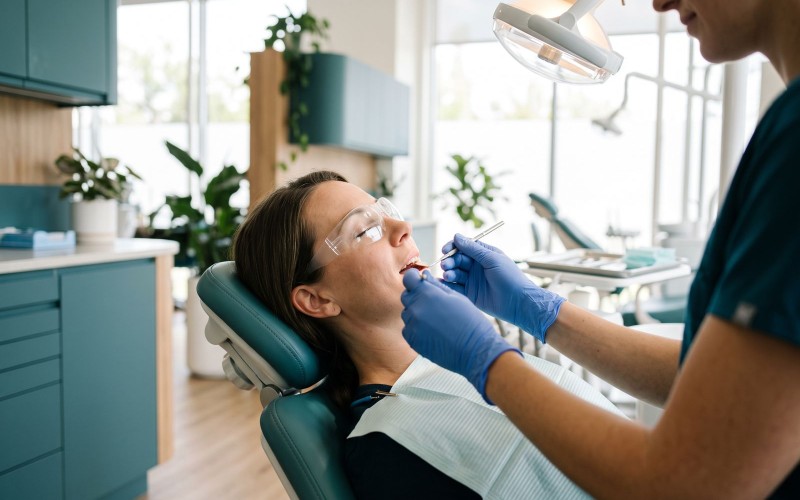
A professional dental cleaning removes the soft bacterial plaque and hardened tartar (calculus) that build up on the tooth surfaces using professional instruments. Cleaning above the gumline is called scaling, while cleaning the root surfaces below the gumline and making them smooth is called root planing. Both procedures are fundamental steps in maintaining gum health and treating gum disease.
What is tartar, and why does it form?
Tartar is bacterial plaque that has hardened on the teeth. Every day, a sticky, colorless layer made up of bacteria builds up on the teeth; this is called dental plaque. Plaque that is not removed by brushing and interdental cleaning hardens with the minerals in saliva and turns into tartar. Because the surface of tartar is rough, it makes it easier for new plaque to accumulate, and it cannot be removed with a toothbrush.
Tartar is most commonly found on the inner surfaces of the lower front teeth and on the cheek side of the upper molars; these areas are close to where the salivary glands open into the mouth. Smoking and drinking tea and coffee can cause staining of the tartar and the tooth surface.
What actually causes gum inflammation is the bacterial plaque living on and around the tartar. Because tartar creates a rough surface to which plaque can attach and cannot be cleaned at home, it becomes a constant source of inflammation along the gum margin. Over time, it can contribute to bleeding gums, bad breath and the progression of gum disease. Regular professional cleaning is one of the main ways to keep this buildup under control.
What is the difference between scaling and root planing?
Scaling (supragingival cleaning) is the removal of tartar and plaque above the gumline. It is performed for preventive and therapeutic purposes in people with healthy gums or with only superficial gum inflammation (gingivitis).
Root planing, or subgingival cleaning, is also commonly known as a deep cleaning. It is the removal of tartar and bacterial plaque that have accumulated in the periodontal pockets below the gumline. It is performed in patients diagnosed with periodontitis and forms the basis of the non-surgical step of gum disease treatment. In the current approach, the aim is to remove bacterial deposits and tartar without removing more tissue from the root surface than necessary.
Who is a professional dental cleaning for?
- People in whom tartar is found on the tooth surfaces during an examination
- People who experience bleeding gums when brushing
- Patients who have been diagnosed with gum disease and whose treatment is being planned
- People in a maintenance program after periodontal treatment
- Situations in which oral health needs to be prepared before implant, prosthetic or orthodontic treatment
- Anyone for whom the clinician considers it appropriate as part of routine oral health check-ups
If you have signs such as bleeding gums, swelling or persistent bad breath, it is advisable to see your dentist for an examination.
How is a professional dental cleaning performed?
Examination and measurements
Before the procedure, the gums are examined, pocket depths are measured when needed, and radiographs are taken. This determines whether a cleaning above the gumline is sufficient or whether treatment below the gumline is required.
Cleaning with ultrasonic and hand instruments
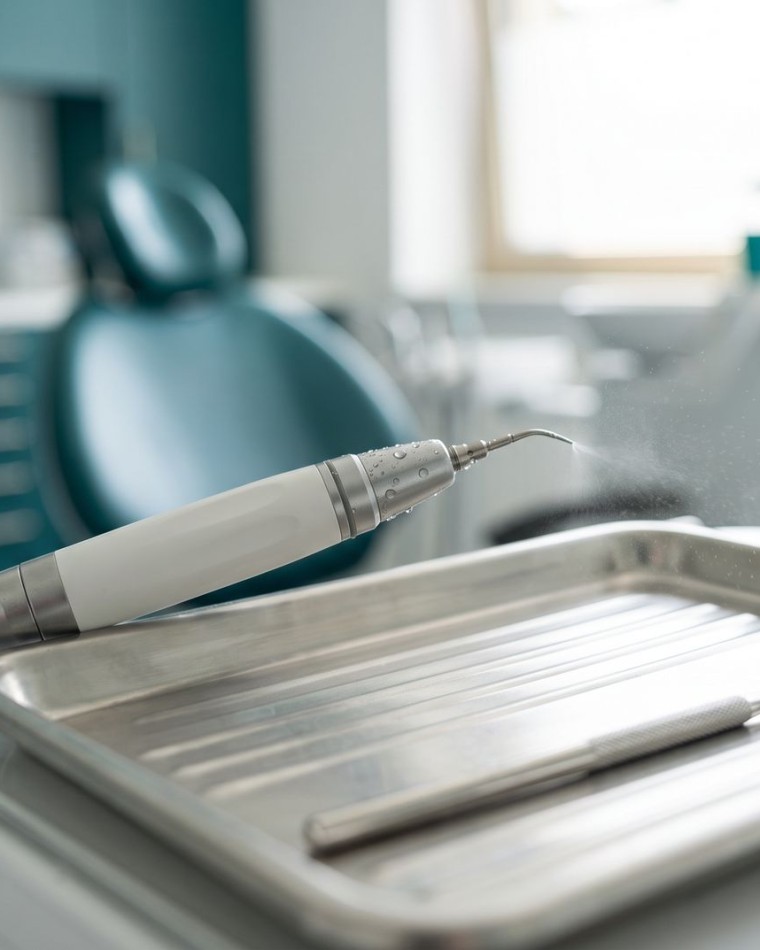
Tartar is removed with vibrating ultrasonic tips and hand instruments called curettes. The ultrasonic device works with a water spray; during the procedure you will feel a slight vibration and hear the sound of water. Hand instruments allow more precise work in narrow and delicate areas; in most cases, both methods are used together. Scaling usually does not require anesthesia. Cleaning below the gumline, however, is performed under local anesthesia; the aim is for you not to feel pain during the procedure.
Polishing
After the cleaning, the tooth surfaces are polished with a special paste and rubber cups or with air-powder systems. Polishing reduces external (extrinsic) staining on the surface and helps create a smoother surface that makes it harder for plaque to attach.
Oral hygiene instruction
The effect of the cleaning depends largely on the care you continue at home. At the end of the session, you are shown how to choose a suitable toothbrush, floss or interdental brush and how to use them.
Tartar removal performed with the correct technique does not wear away tooth enamel. The feeling of gaps between the teeth after the procedure usually comes from areas that were previously covered by tartar becoming exposed, or from the gums tightening as the inflammation subsides. For details, see our article does scaling damage teeth?
How many sessions does it take, and how often should it be repeated?
In people whose gums are healthy or only mildly inflamed, scaling and polishing are usually completed in a single session. Root planing performed as part of periodontitis treatment, on the other hand, can be done in several sessions by dividing the mouth into sections, or in a single longer session. After root planing, a few weeks are allowed for the tissues to heal, and the pocket depths are measured again. This re-evaluation is important for seeing how you have responded to treatment and for planning the next step.
The recall interval is set according to each person's risk. For people with healthy gums, clinicians usually recommend a check-up every 6–12 months. For people who have been treated for periodontitis, the maintenance interval is planned at 3 to 12 months according to their risk profile, as stated in the EFP clinical practice guideline. Because tartar formation differs from person to person, the interval that is right for you is determined after the examination.
What should I keep in mind after a cleaning?
- You may have sensitivity to hot and cold for the first few days; toothpastes formulated for sensitivity can help.
- If local anesthesia was used, avoid eating until the numbness wears off.
- Limiting colored drinks such as tea and coffee, as well as smoking, on the first day may help reduce restaining of the surface.
- Continue brushing gently with a soft toothbrush on the same day.
- Make interdental cleaning a daily habit.
- If the bleeding does not decrease within a few days, let your clinician know.
For techniques to use at home, read our guide to proper brushing and interdental cleaning.
What are the risks and possible side effects?
A professional dental cleaning is a safe, routine procedure; any side effects are usually temporary. These may include tooth sensitivity, mild soreness and bleeding of the gums, and, after root planing, some recession of the gum level as the inflammation subsides. In certain medical conditions, the clinician assesses whether additional precautions are needed before the procedure; this is why it is important to share your health status and the medications you take. If you take blood-thinning medication, mention this before the procedure; do not stop your medication on your own. If you experience prolonged bleeding, marked swelling or fever, it is advisable to contact your clinician.
Is a professional cleaning the same as teeth whitening?
No. Scaling and polishing remove deposits and external staining from the tooth surface; they do not change the tooth's own color. Your teeth may look lighter after a cleaning, but this is because surface stains have been removed. For those who want to lighten the natural color of their teeth, teeth whitening is a separate procedure, and healthy gums are one of the prerequisites for whitening.