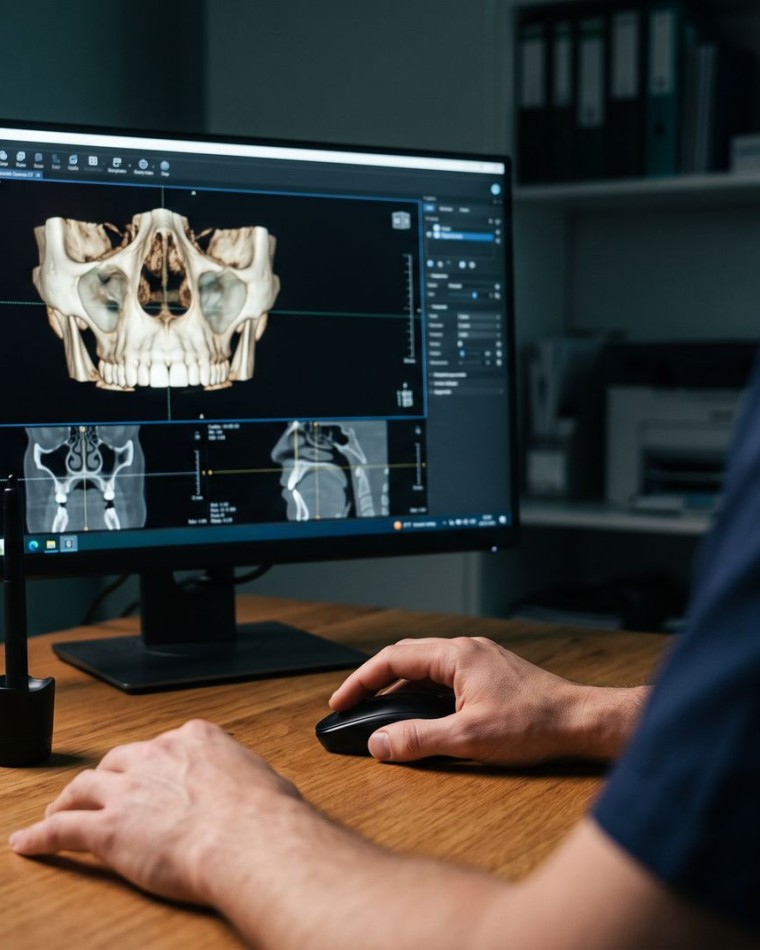
Bone grafting is a treatment used to increase bone volume where it is insufficient at a planned implant site. A sinus lift is a specialized grafting procedure in the back of the upper jaw that raises the floor of the sinus cavity to create room for an implant. Both procedures rely on detailed planning with a 3D CBCT scan.
What is a bone graft?
A bone graft is a material placed where bone tissue is missing that guides the body in forming new bone. The graft acts like a scaffold; over time, the person's own bone tissue grows into this scaffold.
Bone grafts are most often placed before an implant or at the same appointment as the implant. They can also be used during a tooth extraction to preserve the extraction socket. This is called socket preservation, and it helps maintain bone volume for a future implant.
A bone graft is different from the soft tissue grafts used for gum recession. Soft tissue grafts are used to increase gum thickness or to cover exposed roots; for information on this, see the gum recession treatment page. In some implant cases, both may be planned together.
Why does bone loss occur, and who needs a graft?
After a tooth is extracted, the bone in that area gradually resorbs and loses volume. Advanced gum disease, long-term use of removable dentures, trauma, cysts and infections can also lead to bone loss. For information on periodontitis, one of the causes of bone loss, see the article on periodontitis stages and grades.
A bone graft is usually considered in the following situations:
- When the width or height of the bone is not enough to surround the planned implant
- When the sinus floor sits very close to the jawbone ridge in the back of the upper jaw
- When more bone and gum support is desired for aesthetic reasons in the front of the mouth
- When preserving bone volume after a tooth extraction is planned
Whether a graft is needed and which method is appropriate are determined individually after an examination and a 3D CBCT assessment.
What types of bone grafts are there?
Graft materials are divided into four main groups according to their source:
- Autogenous graft: Taken from the person's own bone, usually from another site inside the mouth.
- Allograft: Human-derived bone material that has undergone special processing and is supplied by tissue banks.
- Xenograft: Bone mineral, most often of bovine origin, from which the organic components have been removed.
- Alloplastic (synthetic) graft: Laboratory-made materials with a bone-like structure.
Each material has its own advantages and limitations. In some cases, different materials are used together. The choice depends on the amount and shape of the bone loss, the site and the patient's preferences. You can mention any personal or faith-based preferences regarding animal-derived materials during the examination.
How is guided bone regeneration (GBR) performed?
Guided bone regeneration (GBR) is a technique in which graft material is covered with a barrier membrane to guide new bone formation. The membrane prevents fast-growing soft tissue from entering the graft site and gives bone cells time to settle in the area.
The procedure is performed under local anesthesia; the aim is for you not to feel pain during the procedure. The gum is opened, the bone surface is prepared, and the graft is placed and covered with a membrane. The gum is then stitched closed without tension. The membranes used may be types that dissolve in the body over time or types that need to be removed later.
For larger bone defects, other techniques may be considered, such as fixing bone blocks in place or using special mesh systems (titanium mesh). These methods require more extensive planning and a longer healing period.
Depending on the extent of bone loss, GBR can be performed at the same appointment as the implant or as a separate procedure before the implant. For the full implant process, see the dental implants page.
What is a sinus lift and how is it performed?
A sinus lift is a procedure in the back of the upper jaw in which the thin membrane lining the floor of the sinus cavity (the Schneiderian membrane) is gently lifted and graft material is placed in the space created. After the upper back teeth are lost, bone resorption and downward expansion of the sinus may leave insufficient bone height for an implant in this area.
Open (lateral window) sinus lift
This approach is preferred when bone height is markedly reduced. A small window is opened in the side wall of the sinus, the sinus membrane is lifted and graft material is placed beneath it. Depending on the amount of remaining bone, the implant is placed at the same appointment or after the graft has healed.
Closed (crestal) sinus lift
This approach is used when a more limited increase in bone height is needed. The sinus floor is pushed upward through the implant site using special instruments; a small amount of graft is added if needed, and the implant is usually placed at the same appointment. It requires a smaller surgical area.
The choice between an open and a closed sinus lift depends on the remaining bone height, the anatomy of the sinus and sinus health. If you have chronic sinusitis or any other sinus condition, be sure to mention it before planning; an ear, nose and throat (ENT) evaluation may be requested when needed.
How long does healing take after a graft?
It usually takes a few months for the graft to mature into bone that can support an implant. The time varies depending on the type of graft, the site, the graft volume and the person's healing capacity. This period may be longer for sinus lifts and larger bone augmentations.
When healing is complete, a follow-up examination and, if needed, new imaging are performed; the implant placement and restoration stages proceed based on this assessment.
During the waiting period, temporary solutions designed not to press on the graft site may be used in visible areas. Attending regular check-ups during this time allows any problem to be noticed early.
What should you pay attention to after treatment?
Protecting the graft site is the most important condition for healing. General recommendations are:
- In the first few days, apply cold compresses to the outside of your face at intervals and rest with your head slightly elevated.
- Eat soft foods and do not chew on the treated area.
- Do not smoke; smoking can have a negative effect on graft healing.
- Take the medications your dentist recommends regularly.
- If you have a removable denture, wear it in a way that does not press on the area until your dentist says otherwise.
After a sinus lift, it is also recommended that for a few weeks you avoid blowing your nose forcefully, sneeze with your mouth open, avoid drinking through a straw, and consult your dentist about activities that involve pressure changes, such as air travel or diving.
What are the risks and possible side effects?
Swelling, bruising and tenderness lasting a few days are common after the procedure. Less often, infection, reopening of the stitches, membrane exposure or loss of part of the graft may occur. A tear in the sinus membrane can occur during a sinus lift; this can often be repaired during the procedure. Rarely, sinusitis may develop.
If you notice prolonged pain, increasing swelling, fever, nasal discharge or discharge from the graft site, see your dentist. For implants placed in grafted areas to stay healthy, regular care and check-ups should continue after treatment as well.