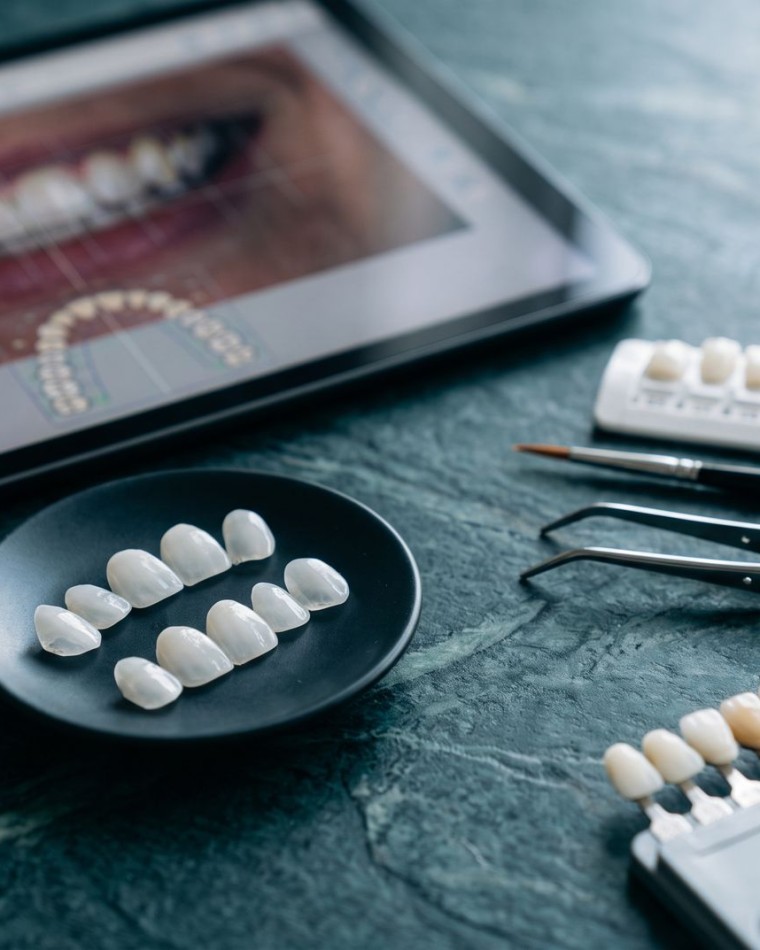
Smile design is individualized aesthetic planning that aims to bring the teeth, gums and lips together in harmony with the face. The gumline shapes the appearance of a smile just as much as the color, shape and alignment of the teeth. That is why healthy gums are the foundation of aesthetic treatments.
What is smile design?
Smile design is not a single procedure; it is a planning process in which facial proportions, lip movements, tooth dimensions, tooth color and gum levels are evaluated together. Based on this plan, one or more procedures such as porcelain veneers, zirconia crowns, composite bonding, teeth whitening and gum contouring may be used.
The goal is to achieve a natural-looking, functional smile that suits the person's facial structure and expectations. Which procedures are appropriate is determined individually after an examination and any necessary tests.
Good smile design does not focus on appearance alone; the bite, chewing forces, speech and ease of cleaning are also evaluated. Restorations that look aesthetically successful but lack functional harmony may develop fractures, wear or gum problems. For this reason, planning covers oral health as a whole.
Why is the gumline important in smile aesthetics?
The gumline is the frame of the teeth. The symmetry of gum levels on the front teeth, the position of the highest points of the gum margins and the fullness of the gum papillae between the teeth directly affect how balanced a smile looks.
Showing too much gum when smiling, uneven gum levels or gum recession may not be correctable with procedures on the teeth alone. In these cases, gum aesthetics procedures are planned as part of smile design. For details on showing too much gum, see the article what is a gummy smile.
Aesthetic restorations placed on inflamed or bleeding gums may lead to problems such as color mismatch, darkening at the gum margin and recession. For this reason, gum health is evaluated before aesthetic procedures; if needed, gum treatment is completed first.
Periodontist Dr. Nadin Gemrekoğlu, DDS, PhD, regards positioning restoration margins in harmony with the gums and respecting the biological boundaries of the gum tissue as a prerequisite for long-term aesthetics. When a restoration margin violates these boundaries, ongoing gum inflammation and changes in gum level may develop.
Who is smile design suitable for?
Smile design is generally planned for people who come in with the following concerns:
- Those bothered by discoloration of their teeth
- Those with chipped, worn or misshapen teeth
- Those with gaps between their teeth or mild misalignment
- Those who feel they show too much gum when smiling or that their gum levels are uneven
- Those who want to replace old fillings or crowns
In cases of marked crowding or jaw misalignment, orthodontic treatment may be recommended first. In people with untreated tooth decay and gum disease, these problems need to be resolved before moving on to the aesthetic phase.
How is digital planning done?
Digital planning is a process that helps visualize the outcome of treatment in advance. In the first step, facial and smile photographs and, if needed, videos are taken; impressions of the teeth are taken or a digital model is created with an intraoral scanner.
Using this data, the length, width and alignment of the teeth are planned according to facial proportions. In suitable cases, the planned design can be transferred onto the teeth with a temporary material and tried in the mouth. This trial (mock-up) lets the person see their new smile in the mirror and allows changes to the design to be made together. Digital images are a planning tool; the result may differ depending on conditions in the mouth.
Shade selection is also an important part of planning. Tooth color is evaluated together with facial features such as skin tone and the shade of the whites of the eyes. Because very white, uniform colors can look artificial, the aim is to mimic the color transitions found in natural tooth structure.
What methods are used in smile design?
Porcelain veneers
Porcelain veneers are thin ceramic shells bonded to the front surface of the teeth. They are usually applied after removing a limited amount of the tooth surface; in some cases, very little or no reduction may be needed. They are used to correct color, shape and minor alignment issues.
Zirconia crowns
Zirconia crowns are durable, metal-free crowns that cover the entire tooth. They may be preferred for teeth with large fillings, fractures or root canal treatment, and where greater strength is needed. They require more tooth structure to be removed than veneers.
Composite bonding
Composite is a tooth-colored filling material that is shaped directly on the tooth. It can usually be applied in a single appointment to correct small chips, gaps and shape irregularities. Because it is more prone to discoloration and wear over time than ceramic, polishing or renewal may be needed at intervals.
Supporting procedures
Depending on the plan, procedures such as teeth whitening, adjusting gum levels or covering receded gums may also be part of the process. If whitening is planned, the shade of the restorations is selected after whitening.
How many appointments does smile design take?
The time varies depending on the methods chosen and the number of procedures. Composite bonding can often be completed in a single appointment, while laboratory-made restorations such as porcelain veneers and zirconia crowns usually require several appointments. If gum contouring is needed, there is a waiting period before the restorations so the tissues can heal.
A laboratory-supported process usually consists of the following steps: examination and planning, a trial mock-up if needed, preparation of the teeth and impressions, placement of temporary restorations, a try-in, and finally bonding of the restorations. At each stage, color, shape and harmony with the gums are checked together.
What should you pay attention to after treatment?
Keeping aesthetic restorations looking healthy over the long term depends on gum health and regular care. Brushing twice a day and cleaning between the teeth with floss or interdental brushes are important; for correct techniques, see the article on brushing and interdental cleaning. Avoiding biting on hard objects, wearing a night guard if you clench your teeth at night and attending regular check-ups are recommended.
With composite bonding, limiting staining habits such as tea, coffee and smoking helps the color last longer. At check-ups, restoration margins, gum condition and the bite are reviewed; polishing and professional cleaning are done if needed.
What are the risks and limitations?
Depending on the procedure, temporary tooth sensitivity, fracture or debonding of restorations, and discoloration of composite may occur. Procedures that remove tooth structure cannot be undone; for this reason, the advantages and limitations of the options need to be discussed in detail before making a decision. If gum health deteriorates, aesthetic problems may develop at the restoration margins. For information on how gum disease relates to general health, you can read the article on gum disease and general health. Results vary from person to person.