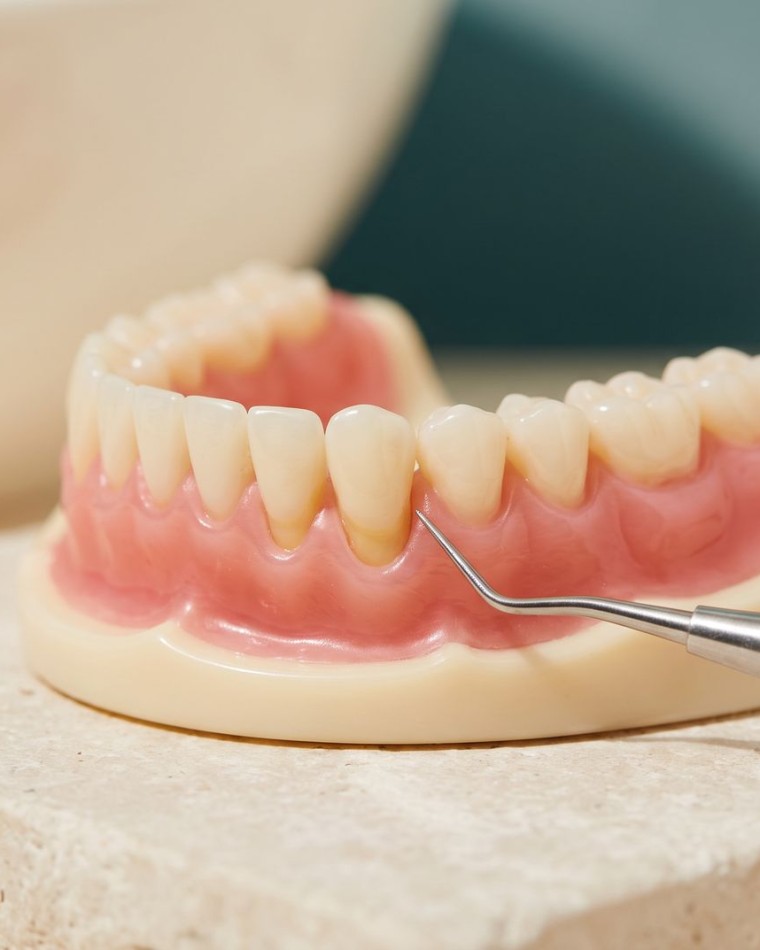
Gum recession is the movement of the gum margin from its normal level toward the root, leaving the tooth root exposed. It can lead to sensitivity, aesthetic concerns and a risk of decay on the root surface. Gum recession treatment involves bringing the cause under control and, where needed, covering the exposed root with gum grafts and plastic periodontal surgery techniques.
Why does gum recession happen?
Gum recession usually develops when several factors come together. Common causes include:
- Using a hard toothbrush or brushing horizontally with too much pressure
- Thin gum tissue (thin phenotype) and thin bone over the front of the tooth
- Loss of connective tissue and bone due to periodontitis
- Teeth positioned toward the outside of the bone, or orthodontic tooth movement
- Lip or cheek attachments (frenum) that pull on the gums
- Lip or tongue piercings, and fillings or crowns that do not fit well with the gums
- Smoking
For more information on the signs and causes, you can read our article on gum recession signs and causes.
How is gum recession classified?
The treatment plan and the expected outcome vary depending on the type of recession. The Miller classification, used for many years, divides recession into four classes. In Class I and II, there is no loss of bone or gum tissue between the teeth; in Class I, the recession does not reach the boundary between the attached gum and the movable mucosa, while in Class II it reaches or extends beyond this boundary. In Class III, there is loss of tissue between the teeth or the tooth is malpositioned. In Class IV, the loss between the teeth is severe.
The Cairo classification, which has become more widely used along with the 2017 AAP/EFP classification, is based on the loss of attachment between the teeth:
- RT1: There is no loss of attachment between the teeth.
- RT2: There is loss of attachment between the teeth, and this loss is equal to or less than the loss on the front surface of the tooth.
- RT3: The loss of attachment between the teeth is greater than the loss on the front surface of the tooth.
Where the tissue between the teeth is preserved, complete root coverage is more predictable; as the loss between the teeth increases, the amount of coverage that can be achieved becomes more limited.
What happens if gum recession is not treated?
Not every case of gum recession progresses quickly; some may stay at the same level for many years. However, if the cause is not eliminated, the recession may progress. Because the exposed root surface is not covered with enamel, it is more prone to sensitivity to hot, cold and brushing, to root decay and to wear. In areas where the attached gum has decreased, brushing may become more difficult and plaque buildup may increase. On the front teeth, teeth that look longer can be an aesthetic concern. For this reason, regular monitoring of the recession is recommended.
Does gum recession always require surgery?
No. The first step is always to control the cause. Your brushing technique is corrected, a soft toothbrush is recommended, and any gum inflammation is treated. Desensitizing treatments can be applied for sensitivity. Whether the recession is progressing is monitored with regular measurements.
Surgical treatment may be considered when the recession is progressing, when there is an aesthetic concern, when sensitivity cannot be controlled by other methods, when the attached gum has become very thin, or before orthodontic or prosthetic treatment.
What methods are used to treat gum recession?
Plastic periodontal surgery includes procedures aimed at adjusting the amount, thickness and position of the gum tissue. Commonly used techniques include:
Connective tissue graft
A thin piece of connective tissue taken from the palate is placed at the site of recession and covered with the person's own gum tissue. It is used both to cover the root and to increase gum thickness, and it is one of the most extensively studied methods in the literature.
Free gingival graft
This involves placing a piece of tissue taken from the palate, together with its surface layer, at the recipient site. It is chosen mainly to increase the amount of attached (keratinized) gum rather than to cover the root. Because its color may differ from the surrounding tissue, its use in the front of the mouth is more limited.
Coronally advanced flap
The gum tissue below the recession is released, moved toward the crown of the tooth and secured over the root. Where the gum is sufficiently thick, it can be used on its own or together with a connective tissue graft.
Tunnel technique
Without making vertical incisions, the gum is released from underneath through small entry points in the form of a tunnel; the graft is placed inside this tunnel and the tissue is positioned toward the crown. It may be preferred especially when several adjacent teeth have recession.
In some cases, biomaterials such as a collagen matrix may be considered as an alternative to harvesting tissue from the palate. Which technique is suitable is determined by considering the class of recession, gum thickness, the number of teeth affected and the person's expectations together.
How is the procedure performed, and how long does the process take?
During the examination, the depth and width of the recession, gum thickness, the amount of attached gum and the level of tissue between the teeth are measured; photographs and radiographs are taken if needed. The choice of technique and the expected outcome are discussed based on these findings. Before surgery, there should be no active inflammation in the gums and plaque control should be good; if needed, scaling and root planing and gum treatment are carried out first. The procedure is performed under local anesthesia; the aim is for you not to feel pain during the procedure. The duration varies depending on the size of the area treated and the technique chosen.
Stitches are usually removed in the first or second week. Although initial healing takes place within a few weeks, it may take a few months for the tissues to mature and for the final appearance to settle.
How much of the root can be covered depends on the tissue and bone support between the teeth, gum thickness, smoking and care after the procedure. For this reason, complete coverage may not be possible in every case; the expected outcome is discussed individually after the examination.
What should I keep in mind after treatment?
- Do not brush the treated area until your clinician allows it; keep it clean with the recommended mouthrinse.
- Choose soft, lukewarm foods in the first few days; avoid chewing on the treated side.
- Avoid pulling your lip to look at the area; this can put strain on the healing tissue.
- Your palate may be tender; a protective palatal plate may be recommended if needed.
- Smoking can impair the blood supply to the graft; it is recommended that you do not smoke.
- You may be advised to avoid strenuous physical activity in the first few days.
- Take pain relievers and other medications as your clinician recommends.
- Keep your follow-up appointments.
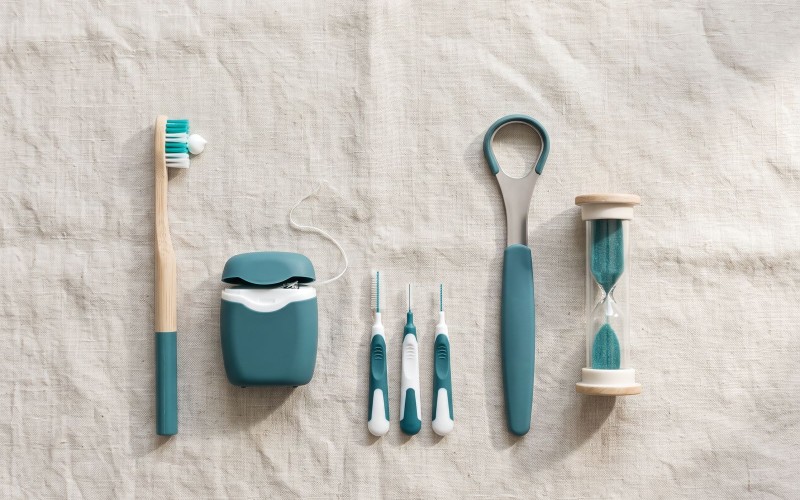
After healing, learning the correct technique is important to prevent new recession: proper brushing and interdental cleaning.
What are the risks and possible side effects?
As with any surgical procedure, some side effects may occur with gum surgery. These may include swelling, bruising, tenderness or mild bleeding at the treated site and the palate, and temporary tooth sensitivity. Part of the graft may not take, the root may be only partially covered, or there may be differences in color and contour. Rarely, an infection may develop. These risks and the outcomes expected in your individual situation are discussed in detail with your clinician before treatment.